The Power of Deep Learning in IT: Revolutionizing Information Technology

From Silicon to Synapses: Why Hardware Matters More Than Ever
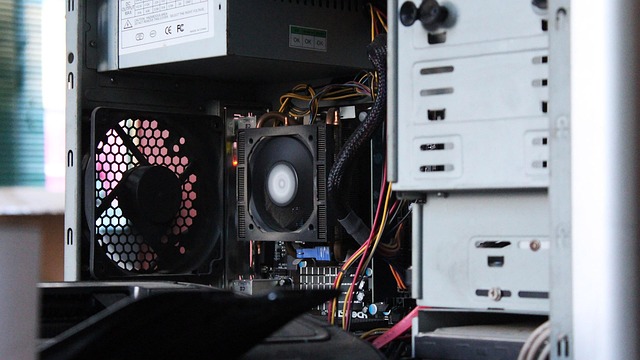
Walk into any modern data center and you will hear the quiet hum of thousands of fans cooling racks of GPUs, TPUs, and custom ASICs. This orchestra of circuitry exists for one primary purpose: Deep learning. While algorithms and frameworks often steal the spotlight, it is the relentless evolution of hardver that has made today’s breakthroughs in IT possible. In other words, without cutting-edge chips, the grand ideas of informational technology would still be scribbles on whiteboards.
GPU Acceleration: The Catalyst
Graphics Processing Units were originally created to render life-like shadows in video games. Yet their highly parallel nature turned out to be perfect for matrix multiplications—the mathematic heartbeat of Deep learning. Suddenly, IT departments discovered that a single server packed with GPUs could train a convolutional neural network 50× faster than a CPU farm. The result? Faster product iterations, reduced energy costs, and an escalating demand for specialized power supplies, PCIe lanes, and next-gen cooling solutions.
AI-First Chips: TPUs, NPUs, and Beyond
Google’s TPU, Apple’s Neural Engine, and a wave of NPUs from startups have pushed the envelope further. These chips hard-wire specific tensor operations, shaving milliseconds off inference times, which translates into real-world magic—instant language translation in video calls, on-device medical imaging, or predictive maintenance alerts in industrial IoT. They also change purchase decisions in IT: instead of asking “How many cores?” architects now ask “How many TOPS per watt?”
Memory Architectures Reimagined
Feeding data to ravenous neural nets is no trivial task. High-Bandwidth Memory (HBM), GDDR6X, and 3D-stacked DRAM have emerged to keep tensors flowing without bottlenecks. Meanwhile, Deep learning practitioners in the enterprise juggle decisions about NUMA node layouts, NVMe over Fabrics, and RDMA to minimize latency. The marriage of AI workloads and innovative memory tech demonstrates how deep learning reshapes not just algorithms but the very wiring of IT infrastructure.
Edge Devices: Shrinking the Data Center into Your Palm
Hardver revolutions are not confined to server rooms. Consider a drone equipped with a vision system that avoids branches in real time, or a smart thermostat that learns your routine after a single day. Arm Cortex-M microcontrollers now carry tiny accelerators capable of running pruning-friendly neural networks at microwatt power levels. For IT teams, this means new security protocols, firmware pipelines, and remote orchestration tools—turning traditional device management into a frontier of AI-enhanced operations.
Cooling and Power: Invisible Foundations
The hotter a GPU gets, the slower it must run. To satisfy Deep learning’s appetite, liquid immersion tanks, dielectric fluids, and advanced airflow analytics are moving from research labs into mainstream IT. Facilities managers use machine-learning-powered DCIM platforms to predict thermal hotspots before they occur, illustrating how AI circles back to optimize the very hardware that enables it.
Open Source Toolchains Meet Custom Silicon
TensorFlow, PyTorch, and ONNX create a universal language that abstracts hardver details. Yet behind each high-level API call lies a compiler targeting CUDA cores, XLA graphs, or FPGA bitstreams. This coupling of open software and proprietary silicon forces IT leaders to consider compatibility, vendor lock-in, and futureproofing when they choose their hardware roadmaps.
Economic Ripples Across Informational Technology
CapEx budgets now include line items for AI accelerators, high-density racks, and dynamic cooling systems. OpEx shifts as predictive models reduce downtime, optimize logistics, and automate customer support. For CIOs, the promise of Deep learning is not merely faster analytics; it is a structural transformation of informational technology’s cost curve.
Skills, Culture, and the Human Element
The hardware renaissance has created new hybrid roles: ML-Ops engineers who script firmware updates, data scientists who monitor GPU utilization, and network admins who speak in RESTful APIs and tensor dimensions. A vibrant ecosystem of training programs, hackathons, and vendor-neutral certifications has emerged, turning deep learning proficiency into a core competency across IT teams.
Looking Ahead at the Hardware-AI Feedback Loop
As 3 nm processes enable billions more transistors per chip and quantum annealers hint at exponential speedups for optimization tasks, one truth remains constant: each leap in Deep learning accuracy demands an equally ambitious leap in hardware. The synergy between silicon innovation and algorithmic creativity will continue to redefine what is possible in informational technology, from self-healing networks to autonomous data centers operating at the edge of the grid.
In this dynamic landscape, embracing the power of Deep learning is no longer optional for IT departments—it is the compass guiding every purchase order, every architectural diagram, and every late-night brainstorming session in front of racks that glow with the promise of tomorrow.