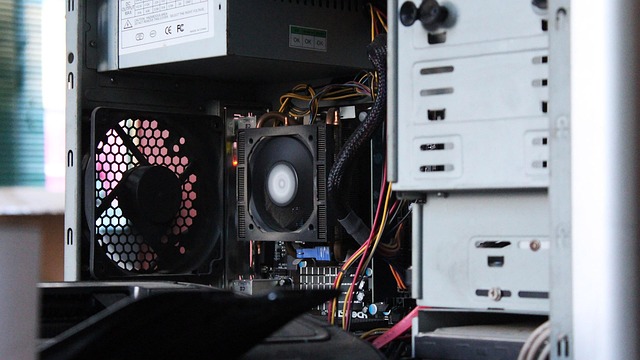
Maximizing Performance in Modern IT Hardware Systems

Performance has become the defining metric for any modern IT hardware system. Whether a data center server, a workstation, or a personal computer, the ability to process data quickly, manage concurrent tasks, and deliver results with minimal latency directly translates into competitive advantage and user satisfaction. The pursuit of higher performance is not a single‑step upgrade but a holistic approach that integrates processor design, memory topology, storage speed, cooling efficiency, power delivery, firmware configuration, and continuous monitoring. In the following sections, we’ll explore the key components and best practices that collectively elevate system performance to its peak.
Core Principles of Performance
Performance is the result of multiple interdependent factors. CPU instruction throughput, memory bandwidth, storage I/O, thermal stability, and power management all play distinct yet intertwined roles. A balanced architecture ensures that no single component becomes a bottleneck. This section outlines the fundamental principles that guide hardware engineers and IT professionals when designing or upgrading systems for optimal performance.
- Balanced Bottleneck Elimination: Identifying and addressing the weakest link in the chain prevents idle cycles and maximizes overall throughput.
- Latency Reduction: Lowering the time between request and response across all layers—CPU, memory, storage—dramatically improves perceived speed.
- Parallelism and Concurrency: Leveraging multi‑core CPUs, SIMD instructions, and multi‑threaded workloads multiplies performance without proportional power increases.
- Thermal Management: Sustaining high clock speeds demands efficient heat dissipation; otherwise, thermal throttling will negate performance gains.
- Energy Efficiency: Modern hardware must balance power draw with performance output to remain economically viable and environmentally responsible.
CPU Selection
The central processing unit remains the heart of performance. Modern CPUs feature heterogeneous core architectures that combine high‑performance cores for demanding tasks with power‑efficient cores for background operations. When selecting a processor for a performance‑centric system, consider the following attributes:
- Clock Speed and Turbo Boost Capabilities – Higher base frequencies provide a consistent performance floor, while turbo features offer burst power.
- Core Count and Thread Support – More cores allow greater parallelism; hyper‑threading effectively doubles the number of logical execution units.
- Instruction Set Extensions – AVX‑512, NEON, or other SIMD extensions accelerate vector calculations crucial for scientific and media workloads.
- Cache Hierarchy – Larger L3 caches reduce memory fetch latency and improve sustained throughput.
- Integrated Memory Controller – Modern CPUs now feature high‑speed DDR4 or DDR5 controllers that directly influence memory bandwidth.
Memory Architecture
RAM is the immediate data reservoir for the CPU. Performance hinges on both capacity and bandwidth. The following aspects are critical when configuring memory for high‑performance systems:
- Memory Speed – DDR4-3600 and DDR5-4800 modules deliver faster data rates, reducing wait times for instruction fetches.
- Dual‑Rank vs. Single‑Rank Modules – Dual‑rank configurations offer higher bandwidth at the cost of increased power draw.
- NUMA Awareness – In multi‑socket systems, aligning processes to local memory nodes mitigates cross‑socket latency.
- ECC Support – Error‑Correcting Code memory ensures data integrity during intensive compute cycles, preventing silent corruption.
- Latency (CL) – Lower CAS latency numbers improve performance in latency‑sensitive applications like gaming or real‑time analytics.
Storage Considerations
Storage devices act as the long‑term memory pool. The choice between traditional spinning disks, flash storage, or emerging storage technologies can dramatically influence overall system performance. This section explores how storage type, interface, and configuration affect throughput and latency.
SSD vs HDD
Hard disk drives (HDDs) have historically dominated in capacity, but their mechanical nature imposes significant latency constraints. Solid‑state drives (SSDs) eliminate moving parts, offering faster access times and higher IOPS. In performance‑driven setups, SSDs are often the default choice for primary storage. Key differences include:
- Read/Write Speed – SSDs deliver read/write speeds up to 5–6 GB/s on SATA interfaces and over 3 GB/s on NVMe.
- Latency – SSDs reduce seek time from milliseconds to microseconds.
- Durability – Flash memory can endure millions of write cycles, though wear‑leveling mechanisms are essential.
- Cost – SSDs carry a higher price per GB, but the performance benefits justify the investment for many workloads.
NVMe Impact
NVMe (Non‑Volatile Memory Express) is a protocol designed for flash memory that operates over PCIe lanes, bypassing the bottlenecks of SATA. NVMe drives deliver unprecedented performance, making them the ideal choice for latency‑critical applications such as databases, virtual machines, and high‑speed data acquisition systems. Considerations for NVMe include:
- PCIe Generation – PCIe 4.0 and 5.0 provide 16x and 32x bandwidth respectively, vastly exceeding SATA limits.
- Queue Depth – NVMe supports up to 64K outstanding commands, enabling high parallelism.
- Endurance and TRIM – Regular maintenance ensures sustained performance over the drive’s lifespan.
- Thermal Management – NVMe drives can heat up quickly; adequate airflow or heatsinks are necessary to maintain optimal speeds.
Cooling and Power
Performance is not solely a matter of silicon speed; thermal and power constraints play a pivotal role. Excess heat forces CPUs and GPUs to throttle down, while power limits can restrict voltage and clock rates. This section outlines strategies to keep temperature low and power stable.
Thermal Design
High‑performance components generate substantial heat. Effective thermal design ensures components stay within safe operating temperatures, allowing them to sustain peak frequencies. Key practices include:
- CPU and GPU Heatsinks – High‑thermal‑conductivity materials such as copper or aluminum dissipate heat efficiently.
- Active Cooling – Liquid cooling systems or high‑fan‑count air coolers can handle higher thermal loads.
- Case Ventilation – Proper airflow paths prevent hot spots; front intake and rear exhaust configurations are standard.
- Thermal Paste Quality – Reapplying high‑performance paste can improve heat transfer between silicon and heatsink.
- Temperature Sensors – Real‑time monitoring allows for dynamic fan curves and throttling thresholds.
Power Efficiency
Power delivery must match performance demands without compromising stability. Modern power supplies incorporate features that enhance efficiency:
- 80 PLUS Gold or Platinum ratings – Higher efficiency reduces waste heat and lowers operating costs.
- Rail Splitting – Separate power rails for CPU, GPU, and memory reduce voltage ripple.
- Dynamic Voltage Scaling – Adaptive voltage adjustments maintain performance while curbing power draw.
- Power Caps – Configurable limits prevent over‑current conditions during peak load.
- High‑Quality Capacitors – Low ESR capacitors ensure smooth power delivery during sudden bursts.
Firmware and Drivers
Hardware performance is only as good as the firmware and drivers that control it. Regular updates and fine‑tuned settings can unlock latent performance potential, fix bugs, and enhance compatibility with newer software. This section covers BIOS, firmware, and driver optimizations.
BIOS Optimizations
The BIOS or UEFI firmware initializes the hardware and sets baseline parameters. Proper configuration can prevent performance pitfalls:
- Memory Timings – Adjusting CAS latency and RAS‑to‑CAS delays tailors performance to specific memory modules.
- CPU Voltage Settings – Fine‑tuning Vcore allows for higher boost frequencies while staying within safe limits.
- PCIe Lane Allocation – Assigning sufficient lanes to NVMe SSDs ensures maximum throughput.
- Power Management – Enabling Intel SpeedStep or AMD Cool’n’Quiet adjusts idle states to conserve power.
- Secure Boot and TPM – While security-focused, these settings should not interfere with performance‑critical workloads.
Kernel Tweaks
Operating system kernels control low‑level hardware interactions. For performance‑oriented deployments, specific kernel parameters and modules can be tuned:
- CPU Scheduler Policies – Choosing a scheduler like CFS or real‑time policies affects task latency.
- HugePages and Transparent HugePages – Reducing TLB misses benefits memory‑intensive workloads.
- I/O Scheduler Selection – Switching from CFQ to NOOP or BQL can improve SSD performance.
- NUMA Policies – Binding processes to specific nodes reduces cross‑node memory traffic.
- Kernel Module Load Order – Prioritizing critical modules can minimize boot time and resource contention.
Monitoring and Profiling
Continuous monitoring is essential to ensure that hardware remains at peak performance and to detect emerging bottlenecks. Effective profiling provides actionable data that informs further optimization.
Tools and Metrics
Several open‑source and commercial tools allow administrators to gather real‑time metrics across the stack:
- CPU Utilization – Tools like
toporhtopdisplay per‑core usage and task distribution. - Memory Bandwidth – Profilers such as
perforhwlocmeasure bandwidth and latency. - Storage I/O –
iostatandfiobenchmark read/write operations and queue depths. - Temperature and Power – Sensors like
sensorsor vendor‑specific utilities report thermal and voltage status. - Application Profiling – Language‑specific profilers (e.g.,
gprof,valgrind) identify hotspots in code paths.
In conclusion, achieving peak performance in modern IT hardware systems demands a meticulous, layered approach. From selecting the right CPU and memory configuration to ensuring optimal thermal and power environments, each decision contributes to a system’s overall speed and reliability. By continually refining firmware settings, keeping drivers up to date, and employing rigorous monitoring, organizations can maintain a high‑performance posture that adapts to evolving workloads and technological advances. The pursuit of performance is an ongoing journey, but with the strategies outlined above, you can build systems that consistently deliver the speed, responsiveness, and efficiency required in today’s data‑driven world.