The Evolution of Processors in IT: A Breakdown of Informational Technology

From Room-Sized Machines to Palm-Sized Powerhouses
When enthusiasts in the Hardver sphere talk about milestones, the first name that surfaces is usually the Processor. At the dawn of IT, a single calculation could require a wall of vacuum tubes humming like a restless beehive. Those early processors—if one can even call them that—needed entire maintenance crews and the patience of saints. Still, their roar marked the first heartbeat of modern informational technology.
The Microprocessor Revolution
In 1971, the silicon landscape shifted. The advent of the microprocessor condensed racks of circuitry onto one sliver of doped silicon. Hobbyists soldering kits in dimly lit garages suddenly found themselves at the threshold of a new era. The word Processor no longer referred to building-sized equipment; it became the core of personal empowerment, a humming square that could fit between finger and thumb yet hold within it the promise of personal computing.
Clock Speed Craze and the Ghz Arms Race
Throughout the 1990s and early 2000s, IT departments and gamers alike lived by one metric: MHz, soon Ghz. Every bump in clock speed felt like strapping a turbocharger to your daily workflow. A faster Processor translated into quicker renders, snappier databases, and frag-saving frame rates. Silicon engineers pushed photolithography to atomic-level precision, all in pursuit of that next glorious megahertz milestone.
The Heat Wall
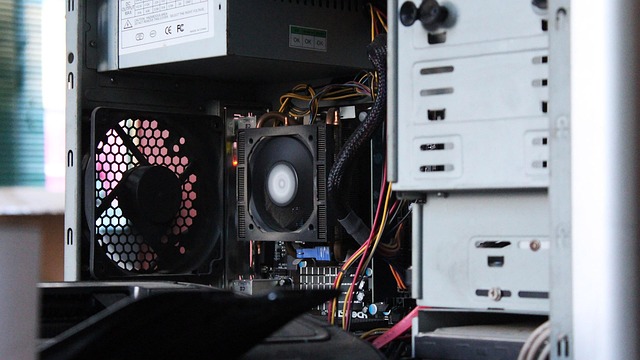
Yet physics plays a cruel referee. The moment transistors began to crowd each other in the nanometer neighborhood, thermal limits turned into brick walls. In server rooms across enterprises, the howl of cooling fans became a soundtrack to the limitations of brute-force scaling. Something had to give.
Multi-Core Renaissance
Enter the multi-core paradigm. Instead of coaxing more speed from a single Processor, architects multiplied the brains inside the package. Dual-core became quad-core, octa-core, and beyond. Parallel thinking infiltrated software design, teaching programmers to break tasks into concurrent threads. For anyone wrestling with complex simulations or editing 4K footage, watching CPU usage dance across eight or sixteen bars felt like a synchronicity between human imagination and silicone sinews.
Low-Power & Mobile Momentum
While desktops flexed, another branch of informational technology demanded frugality—mobile. Suddenly, the world wanted day-long battery life in a device lighter than a paperback. ARM architectures, designed for sipping power, rose to prominence. The emphasis shifted from raw clock cycles to instructions-per-watt. Your smartphone’s processor, barely warm to the touch, executes billions of operations while navigating GPS data, playing music, and letting you edit presentations on the go.
The AI & Heterogeneous Computing Wave
Today the term Processor is no longer singular. CPUs share motherboards with GPUs, TPUs, NPUs, and purpose-built accelerators. Deep-learning workloads that once crawled on traditional cores now sprint thanks to tensor units optimized for matrix math. This heterogeneity reshapes the Hardver landscape; a modern workstation feels less like one brain and more like a committee, each specialized core voting on a different slice of data.
Fabric, Chiplets, and the Near Future of IT
Scaling continues, but sideways. Instead of carving every transistor on a monolithic die, engineers disaggregate. Chiplets stitched together by high-speed interconnects behave as one massive processor while sidestepping yield and thermal headaches. For IT strategists, this means upgrading specific compute tiles without discarding entire systems—a modular dream echoing in data centers worldwide.
An Invitation to Reflect
If you’ve ever felt the warmth of a CPU heat sink under load, or watched compile times evaporate after an upgrade, you’ve personally witnessed the triumphs of Processor evolution. The journey from vacuum tubes to AI accelerators is not merely a catalog of specs; it’s an emotional lineage. Every improvement resonates in the hum of fans, the instant-on boot of a laptop, the seamless zoom of a CAD model. In the vast chronicle of informational technology, the Hardver heart keeps beating, nanoseconds at a time, urging us toward whatever unimaginable breakthroughs lie only a few cycles ahead.