Understanding the Importance of USB Port in Modern Hardware

In the ever‑evolving landscape of information technology, the humble USB port has become an indispensable conduit that bridges countless devices, from the smallest sensors to the most powerful servers. Though often taken for granted, this interface dictates how efficiently hardware communicates, powers, and interoperates. The term USB port conjures images of a familiar rectangular shape, yet the technology behind it encapsulates a rich history of innovation, standardization, and future‑ready design. Understanding its importance is essential for anyone involved in IT infrastructure, hardware engineering, or simply trying to make sense of why a single port can support such a vast array of functions.
From Serial to Universal: The Birth of USB
The concept of the Universal Serial Bus emerged in the early 1990s as a solution to the clutter of legacy ports and cables that surrounded personal computers. The first USB specification, released in 1996, unified data transfer, power delivery, and device identification under one protocol. It replaced dozens of connectors—serial, parallel, PS/2—with a single, hot‑swappable interface. This simplification not only made desktops cleaner but also lowered manufacturing costs and improved reliability. The original standard, USB 1.0, offered 1.5 Mbps, a modest speed that quickly proved inadequate as devices grew more demanding.
Standard Variants and Their Roles
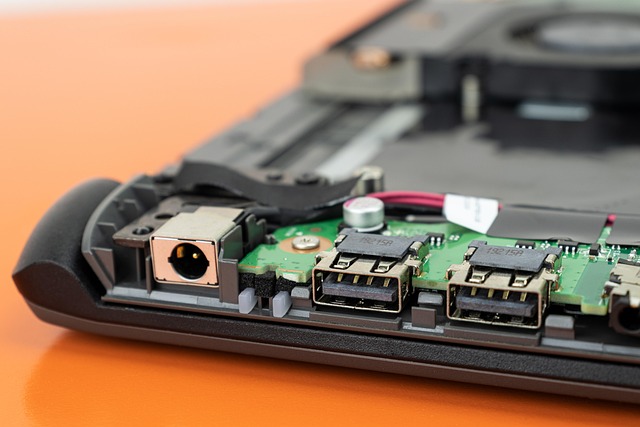
Over the decades, USB has branched into several physical form factors, each tailored for specific use cases. The classic Type‑A port, rectangular and bulkier, remains the most common in desktops and laptops. In contrast, the Type‑B port is square and often found on printers and external hard drives. Small variations such as Mini‑USB and Micro‑USB facilitated mobile devices and portable accessories, while the revolutionary Type‑C connector introduced reversibility, higher power delivery, and support for alternate modes like DisplayPort and Thunderbolt. Each variant serves a distinct niche, yet they all share the core USB protocol, ensuring cross‑compatibility.
Evolution of Speed: From 1.5 Mbps to 40 Gbps
Data transfer rates have been the driving force behind USB’s generational leaps. USB 2.0 introduced in 2000 pushed speeds to 480 Mbps, sufficient for high‑resolution video and large file transfers. USB 3.0 (and 3.1 Gen 1) followed with 5 Gbps, while 3.2 Gen 2 added 10 Gbps by multiplexing lanes. The current USB4 specification, aligned with Thunderbolt 3/4, offers up to 40 Gbps, matching the bandwidth of the fastest internal interfaces. These improvements mean that a single USB port can now handle external GPUs, 8K video streams, and rapid data backups, a task once reserved for proprietary connections.
Power Delivery: From 5 V to 100 W
Beyond data, USB ports deliver power—a feature that has expanded dramatically with the advent of USB Power Delivery (USB‑PD). Early standards supplied a maximum of 2.5 W, sufficient for keyboards and mice. USB‑PD, standardized in 2014, allows negotiation of voltage and current up to 100 W (20 V at 5 A). This capability supports everything from charging laptops in under an hour to powering peripheral devices that require higher wattage. The integration of power delivery into a single cable eliminates the need for separate charging adapters, simplifying cable management and reducing e‑waste.
Broadening Device Ecosystems
Modern IT environments rely on the versatility of the USB port to connect a wide spectrum of hardware. In data centers, servers use USB for firmware updates, diagnostics, and low‑speed peripheral control. Edge computing devices, often constrained by space and power, embed Type‑C ports for rapid data ingestion and charging. Mobile phones and tablets, once limited to proprietary connectors, now use USB‑C to access high‑speed external storage, displays, and power banks. Even the Internet of Things (IoT) benefits, with many sensors and controllers employing USB for low‑cost, plug‑and‑play connectivity.
Security Concerns in a Connected World
As the USB port becomes a conduit for both data and power, it also opens pathways for security vulnerabilities. Malicious devices can masquerade as legitimate peripherals, delivering malware or exfiltrating data—a phenomenon known as “badUSB.” Corporate policies now enforce port control, using USB locks, authentication, and endpoint monitoring to mitigate risks. Additionally, the power negotiation in USB‑PD introduces potential for power‑based attacks, where an attacker forces a device into a high‑current state. Addressing these concerns requires a combination of hardware safeguards, firmware updates, and user awareness.
Future Directions: Wireless and Beyond
While the wired USB ecosystem remains robust, emerging trends hint at a shift toward wireless alternatives. Technologies such as Wi‑Fi 6E, Bluetooth 5.2, and soon Wi‑Gig are beginning to provide comparable data rates without cables. However, until wireless standards match the reliability and low latency of USB, especially for high‑bandwidth devices, the USB port will retain its primacy. Meanwhile, USB4’s integration of Thunderbolt and DisplayPort ensures that future peripheral demands—virtual reality headsets, high‑resolution displays, and fast storage—continue to be met.
Environmental Impact and Sustainability
Reducing the environmental footprint of IT hardware is increasingly critical. The universal nature of the USB port decreases the need for multiple specialized cables, simplifying recycling processes. Additionally, USB‑PD’s efficient power negotiation reduces overall energy consumption. Manufacturers are also developing USB ports that support lower power modes for idle peripherals, extending battery life in mobile devices. These ecological considerations reinforce the port’s role not just as a technological standard but as a contributor to sustainable development.
Conclusion: A Cornerstone of Modern IT
From its humble beginnings as a solution to desktop clutter to its current status as a high‑speed, high‑power, multi‑mode interface, the USB port has shaped the trajectory of modern hardware. Its adaptability across generations, compatibility with an ever‑expanding array of devices, and continuous evolution in speed and power delivery make it an essential component of contemporary information technology. As the IT landscape moves toward higher bandwidths, tighter security, and greater sustainability, the USB port remains at the heart of innovation—an enduring testament to the power of standardization in a connected world.